
Due to a lack of princesses, Oscar is chosen to go with the dragon. He cleverly outwits the dragon in this whimsical tale by German author, Ute Krause.
 Bountiful Baskets share from a few weeks ago.
 We chose the following soaps for the experiment (from top left going clockwise): tan Safeguard, white Dove, green Zest, white Ivory, tan Yardley, orange Dial and white Lever 2000. Soaps were obtained from our storage and my parents storage and a few were purchased from the store. (And, yes, the date on the picture is wrong-we're working on changing the date-more camera issues as always.)
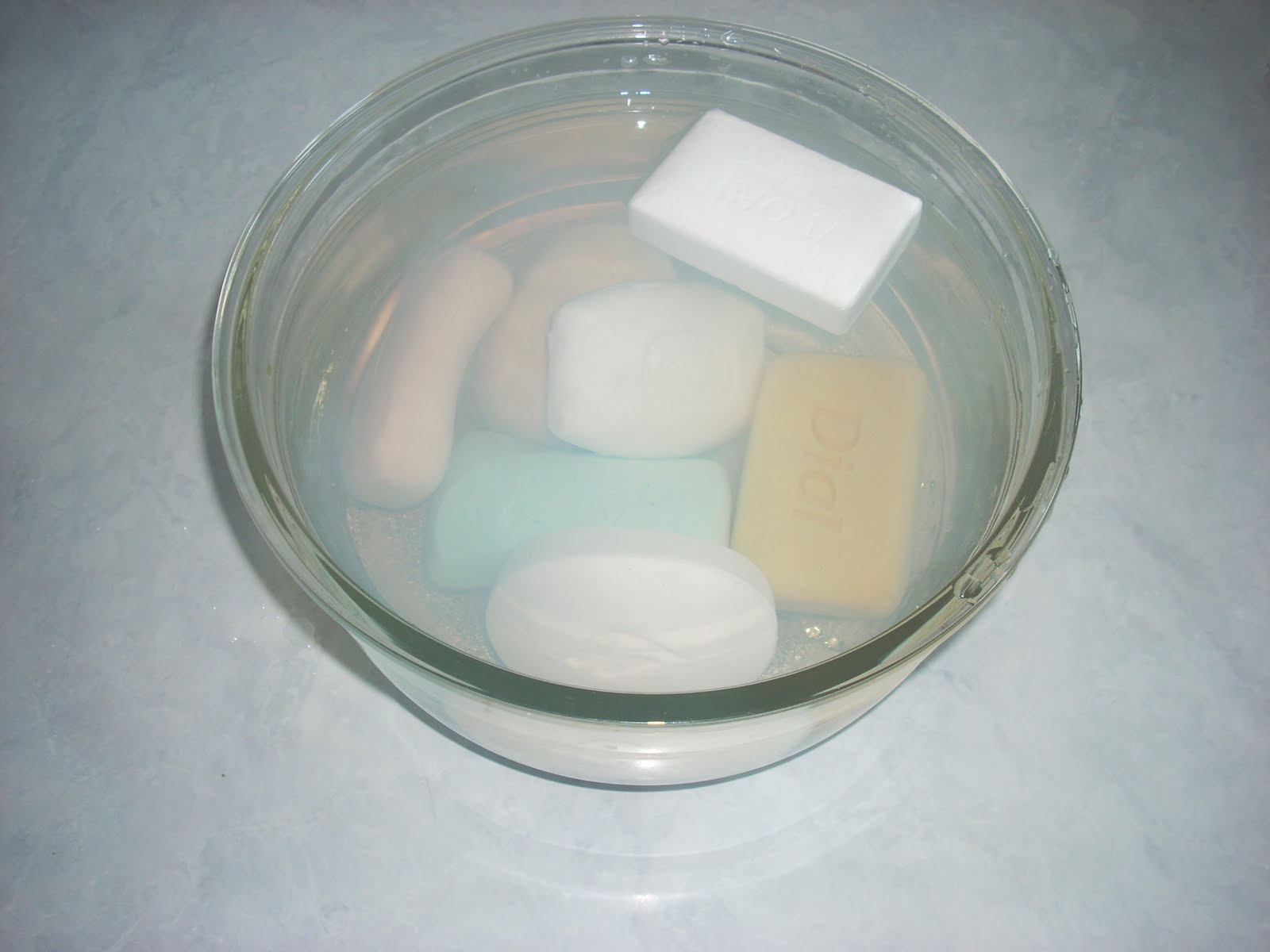 Just as the book proclaimed! All the soaps sunk except for the Ivory bar which is floating near the top right of the bowl. Then we cut the Ivory into four chunks and placed them on a plate and "baked" it in the microwave for two minutes. We probably should have stopped at about a minute and a half because our soap souffle overflowed the plate and then it deflated a lot when it was taken out of the microwave.
 3 pieces of equipment: 1 2-L bottle of soda (diet is easier to clean up-as is lemon-lime vs. a cola or colored soda which might stain onlookers), 1 pkg. Mentos mints (the chewy mint from Holland but available at many U.S. grocery stores-don't eat the mints even though they are yummy-buy a second package for a treat after the experiment), and, finally, a piece of plain paper.
 Roll paper into a cylinder shape with a diameter just big enough for the Mentos to fit and to fall into the opening of the soda bottle. Unwrap Mentos and fill paper cylinder with all the candies-lining them up just like they were aligned in the packaging. Hold them in by covering the bottom of the cylinder and keeping the cylinder shape.
 Have someone fast and agile take the cylinder of Mentos to the just barely opened bottle of soda that has been placed on a stable platform such as cement, asphalt or a piece of wood (as shown in the picture) [do this experiment outside with a lot of room]. Have them remove their finger from the bottom of the cylinder and let all the Mentos fall into the soda bottle. Jump back quickly. (See bottom picture of a geyser of soda.)
 Thank you to Secret Science:25 Science Experiments Your Teacher Doesn't Know About by Steve Spangler for the Mentos Geyser Experiment. Read more about the experiment and why it works so well with Mentos by checking out the book from your local library (or by studying up on nucleation.) Thank you also to Mentos which is a trademark candy. Support science! Buy Mentos!


 . We found that five gummy bears were 1/2 ounce. Then place gummy bears in glass of water and let them soak for 24 hours.

 (The smaller red and green bears are examples of bears not placed in water and not expanded like their water-bloated companions.
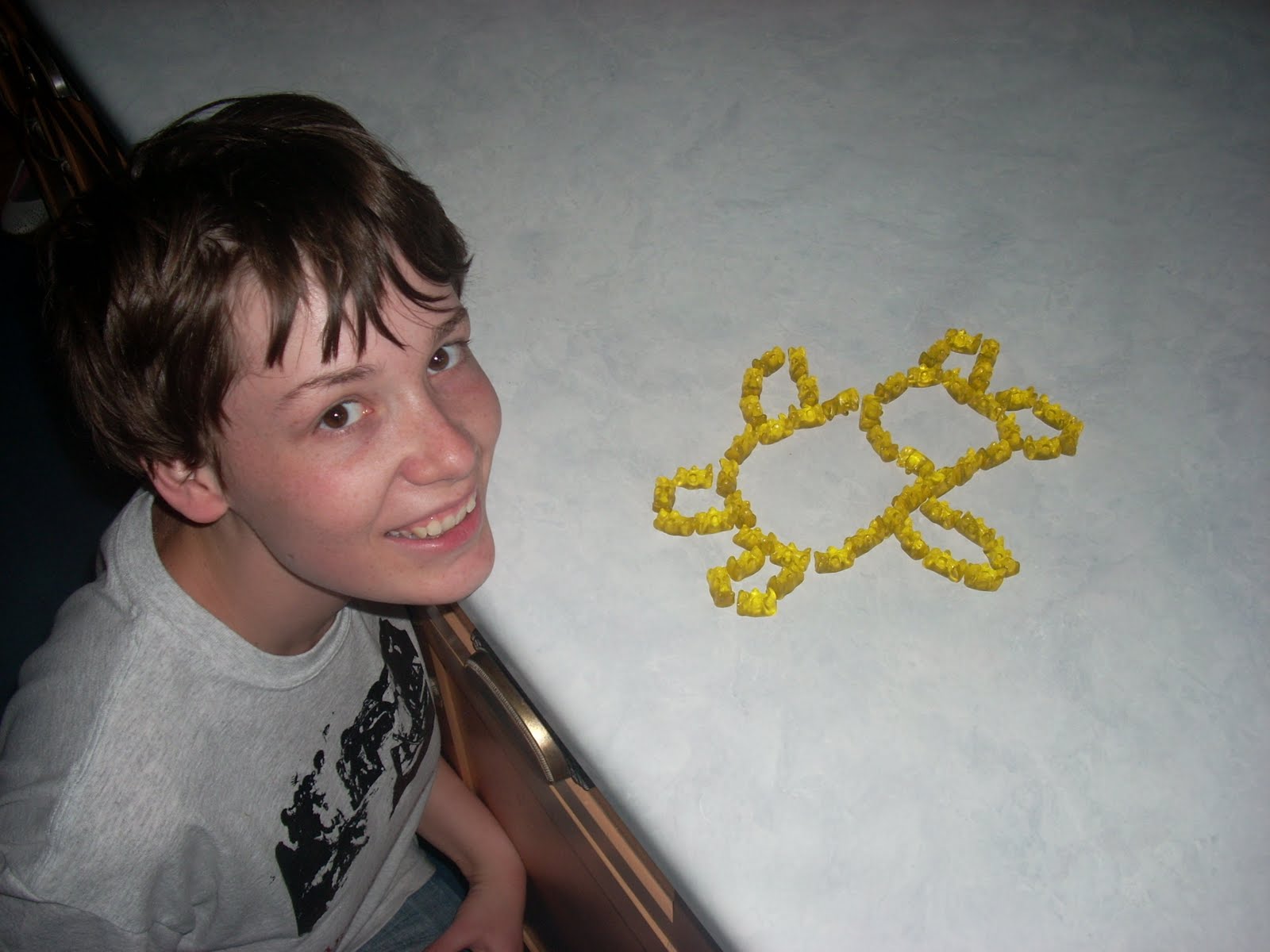
 As part of the experiment I asked everyone to come up with a gummy bear art pose. Mica shows us a giant yellow gummy bear. Hedgehog chose a scene of a gummy bear battle. The vanquished gummy bears floated down the "paper river" for the consumption of the local giant human (Hedgehog). Daisy is displaying "Gummy Bear on Nose" in reference to the oft depicted "Bumblebee on Nose". Jean chose a simple design of gummy bears reading.


